What does it mean to live in a world not made for you?
I believe this is a question a lot of us are grappling with whether we are aware of it or not. It feels louder lately. Perhaps it is because now, at a healthier spot, I am able to fully listen and also begin to imagine what a world made for me would be like. It isn’t a new question. Racialized people, exploited nations, exploited workers, neurodivergent people, disabled people, queer folks, et al – are all individuals and communities who have come up hard against this question for quite some time. I think there is beginning to be an answer, or at least, a rallying cry to imagine a different world that IS made for us.
I am going to talk in broad strokes here. What it means to not live in a world made for you is this:
1) an environment that is unsuitable for you to thrive in
2) a lack of ability to fulfil basic needs and resources
3) a consistent sense of pain in trying to make yourself ‘fit’ including consequences from when you fail to ‘fit’
4) a consistent sense of trying to make yourself something else
5) a consistent sense of tightrope walking, of never being able to totally keep up
This is the crux of what brought me into the sustainability space. What made me begin becoming acutely aware of how my built environment was not made in a way that was made for me. There is no way for me to begin to write about sustainability or the environment without that conversation becoming enmeshed with my lived experience as a neurodivergent person with ADHD. For me to do so would mean for me to strip away the struggle that got me here. It would mean stripping away integral parts of who I am and how I move in the world and leaving behind what would feel like alienating lists of ‘Top 10 Sustainability Hacks for your Laundry!’ written with a cheerful but hollow echo. That echo of what would be missing – which is also what was missing from any of the brief forays into ‘helping save the planet’ or ‘going zero waste’ I had before. Those previous forays were also wrought with guilt and shame, and those are two things I certainly do not want to bring into any conversations or resources I’m sharing. Those chirpy articles also often sidestepped the colonial roots and patterns that come with ‘destroying the planet.’ We cannot move forward while ignoring those roots because they’re ultimately what need to be addressed.
So, here I am, finally sitting down to post into the void of the internet and hoping what I have to share is useful to someone, somewhere. Hoping to make a small space for myself to exist outside of the pressure to post daily or feed an algorithm.
Part of my struggle in beginning this blog was the idea that I needed to ‘pick a lane.’ I couldn’t write about everything I wanted to without it seeming disparate and scattered. However, having neurodivergency means my brain is wired differently, and picking a lane and denying myself the ability to let the paths of my mind both wander and converge as they wish is a painful process. I am fuelled by making juicy connections between things and by noticing how patterns cross between different spaces. It’s also where the title for my blog comes from, Robert Frost’s poem “The Road Not Taken.” About paths diverging, and taking different routes, and how way leads to way. If I were to pick a lane I would be putting a square peg into a round hole, and I’m also done shaving parts of myself off just to make things conceptually easier.
That is what the concept of ‘masking’ is for people who are neurodivergent is. It means learning to cover up the parts of ourselves that are deemed socially unacceptable. I very quickly learned that my special interests were annoying to others as ‘all I talked about were animals’ and it became clear that that was ‘uncool.’ I was weird for only wearing overalls for a year because I couldn’t handle the sensation of a waistband. I learned it was better to make myself smaller. To talk less. To keep my intense interests smothered because my wild enthusiasm made others uncomfortable.
[Even as I am writing this, I hear the familiar voice telling me that this is too long, too uninteresting, too about me, to get to the point already.]
It is frightening, to unmask. It is also freeing, to see all the ways I was forcing myself to fit into shapes and expectations that didn’t fit for me. Unmasking means treating myself with the same ideals and attention I do when caring for any other living thing. When attending one of the Slow Factory’s lectures on Fashion & Sustainability this spring their lecturer Tracy Reese [link here] introduced the concept of the word culture, by its biological definition:
verb
BIOLOGY
- maintain (tissue cells, bacteria, etc.) in conditions suitable for growth.
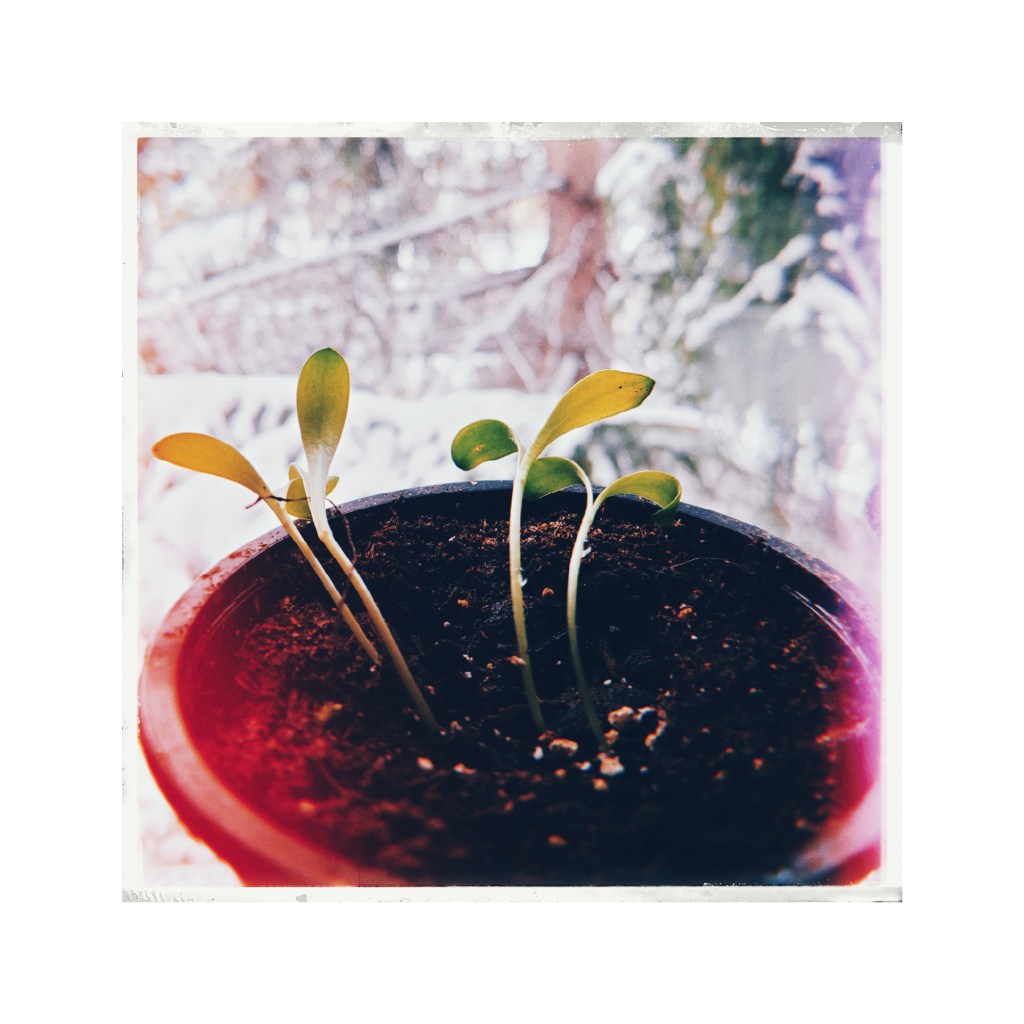
The idea stuck with me as a beautiful new way to consider the function of culture in the human species. At my lowest time, I was not living in conditions suitable for my growth. I essentially drove myself to the breaking point where both my mind and body screamed at me to pay attention. What did my mind and body have to say to me when I listened?
1) That more things were not going to contribute to my happiness. In fact, having as many as I did was detrimental in terms of the time and energy they took to manage.
2) The idea that I needed to ‘push through’ or do things one way just because ‘others could’ was causing me much undue stress and pain.
3) That trying to fit others’ expectations of me had stripped me of all joy and inspiration in my life and landed me 5 years into a career that went against my core values and needs.
My mind and body also told me to slow down.
4) That slowing down meant stopping to appreciate a flower blooming on the roadside to take a photograph. It meant walking instead of taking transit. It meant experiencing so much more vs. being the most efficient.
5) Pleasure is a playground of nurturance. Truly enjoying a process and investing in it with time and practice was a priceless experience. One I wanted to have in as many parts of my life I could think of.
6) Giving myself permission to use accommodations to make things more comfortable was not taking the easy way out or being lazy. It was maintaining conditions for growth. So all my energy was not spent just, Trying to Be™.
7) I have an incredible inner resourcefulness. My instinct for survival and how to make things work with the least amount of effort possible is really something to cherish.
8) It is scary to grow. It feels unfamiliar to spread into new territories when the culture you have been keeping of yourself was so small and so suboptimal. I still feel shaky and unsure, but the need to see what happens if I do let myself spread and grow is stronger than my fear. It is scarier to think that I held myself back and what I missed because I kept my mask on. Imagine if the swan in the ugly duckling had kept trying to be a duck. What it would have had to do to itself to make that a reality. An alteration to its long throat. A dyeing of its feathers. A changing of its call. No change that would be a positive embrace toward its true self. That effort feels worse to me than seeing if I can find my kind. And frankly, I know they are out there. I see them and they make my soul sing.
The concept of sustainability in this context is a vast one for me. It is both personal and expansive. I first needed to make my own life sustainable for myself to even begin thinking about what it might mean to move from surviving to thriving. To see how my shifts on a personal-micro-level mirrored what my ideals meant for a macro level.
Now I can see clearly some of the world that is made for me. One where ‘made’ things are made with care and intention and treated with care and intention. They are invited into my space with care and intention. They are organized into places I have designated for them. They become staples, kind of like familiar friends that become part of my day-to-day motions.
There is a sense of peace and simplicity. A sense of freedom for my mind to focus on other things instead of the management of material clutter. A fluidity of systems made for me, where I have not tried to deny my particular impulses or habits. If I need a laundry hamper in the bathroom because that is so often where dirty piles of clothes end up, I put one there, instead of thinking to myself I SHOULD be able to take my laundry to my room instead because no home magazine ever showed me a laundry hamper in the bathroom before. I approach myself as I am, not as I want to be.
There is ease, and simplicity. A letting go of the superiority of packaged products. One detergent, vinegar, and baking soda are more than enough to accomplish most of my household cleaning. Physical spaciousness as my cleaning products are now only 3. Mental spaciousness as I no longer need to keep a long inventory and remember to get what are essentially many kinds of the same soap.
There is a release of overwhelm. An easy breath as I know I can sustain this. An easy breath as I hope, this is a way forward that the earth could sustain. And a heavy inhale to prepare because my individual choices cannot be the only driver against the goliath of globalized consumption.
I hope you will come with me on this journey as I work through the muck of all of this with joy, rage, grief and curiosity all in equal measures. The topics will wander, opinions will undoubtedly shift, and I hope conversations will begin as I don’t think any of us imagine worlds made for us where we end up alone and responsible for the weight of the world.
-S

 a divergent wood
Leave a comment